
- Complete Blood Count (CBC): Evaluates overall blood health including red/white blood cells, hemoglobin, and platelets. Helps detect anemia, infections, and blood disorders.
- ABO Blood Grouping: Determines blood type (A, B, AB, O) and Rh factor. Essential for medical emergencies requiring transfusions.
- Erythrocyte Sedimentation Rate (ESR): Measures inflammation levels in the body. Used to detect autoimmune disorders and chronic infections.
- RA Factor (Quantitative): Screens for rheumatoid arthritis by detecting autoimmune antibodies. Helps diagnose joint inflammation conditions.
- CRP (Quantitative): C-reactive protein test identifies systemic inflammation. Useful for assessing heart disease risk and infections.
- Glucose Fasting: Measures blood sugar after 8-12 hours fasting. Primary screening test for diabetes and prediabetes.
- HbA1C: Reflects 3-month average blood sugar levels. Gold standard for long-term diabetes monitoring and diagnosis.
- Liver Function Test: Comprehensive panel (SGOT, SGPT, proteins) to assess liver health. Detects hepatitis, fatty liver, and cirrhosis.
- Renal Function Test: Evaluates kidney performance through creatinine and urea levels. Identifies kidney disease and dysfunction.
- Lipid Profile: Complete cholesterol check including HDL, LDL, and triglycerides. Assesses cardiovascular disease risk factors.
- Calcium: Measures blood calcium levels. Important for bone health and detecting parathyroid disorders.
- Uric Acid: Screens for gout and kidney stones. Also indicates metabolic syndrome risk.
- Vitamin B12: Checks for deficiency causing anemia and neurological issues. Especially important for vegetarians/vegans.
- Vitamin D: Assesses bone health and immune function. Deficiency linked to osteoporosis and chronic fatigue.
- Thyroid Function Test (TFT): Evaluates thyroid hormones (TSH, T3, T4). Diagnoses hypothyroidism and hyperthyroidism.
- Prostate Specific Antigen (PSA) Total: Screens for prostate enlargement and cancer. Recommended for men over 40.
- Carcinoembryonic Antigen (CEA): Tumor marker for gastrointestinal cancers. Used for cancer detection and monitoring.
- CA 19.9: Pancreatic and digestive tract cancer marker. Helps in early cancer detection and treatment monitoring.
- Alfa-fetoprotein (AFP): Liver cancer and hepatitis marker. Also used in testicular cancer screening.
- Urine Routine Examination: Analyzes kidney function and urinary tract health. Detects infections, diabetes, and kidney disease.
- Stool Routine Examination: Checks for digestive disorders and infections. Screens for parasites and malabsorption issues.
- Stool For Occult Blood: Early screening for colon cancer and GI bleeding. Detects blood not visible to the naked eye.
- Stool For H. pylori Antigen: Identifies stomach ulcer-causing bacteria. Helps diagnose gastritis and peptic ulcers.
- Chest X Ray: Evaluates lung and heart conditions. Screens for TB, pneumonia, and heart enlargement.
- Electrocardiogram (ECG): Records heart's electrical activity. Detects arrhythmias, heart attacks, and other cardiac issues.
- Ultrasound Pelvis and Abdomen: Imaging of abdominal organs and pelvis. Checks liver, kidneys, prostate, and bladder health.
- Echocardiogram: Ultrasound of heart structure and function. Assesses valves, chambers, and pumping efficiency.
- TMT Monitoring (Treadmill Test): Cardiac stress test under physical exertion. Evaluates heart performance during exercise.
Specialist Consultations:
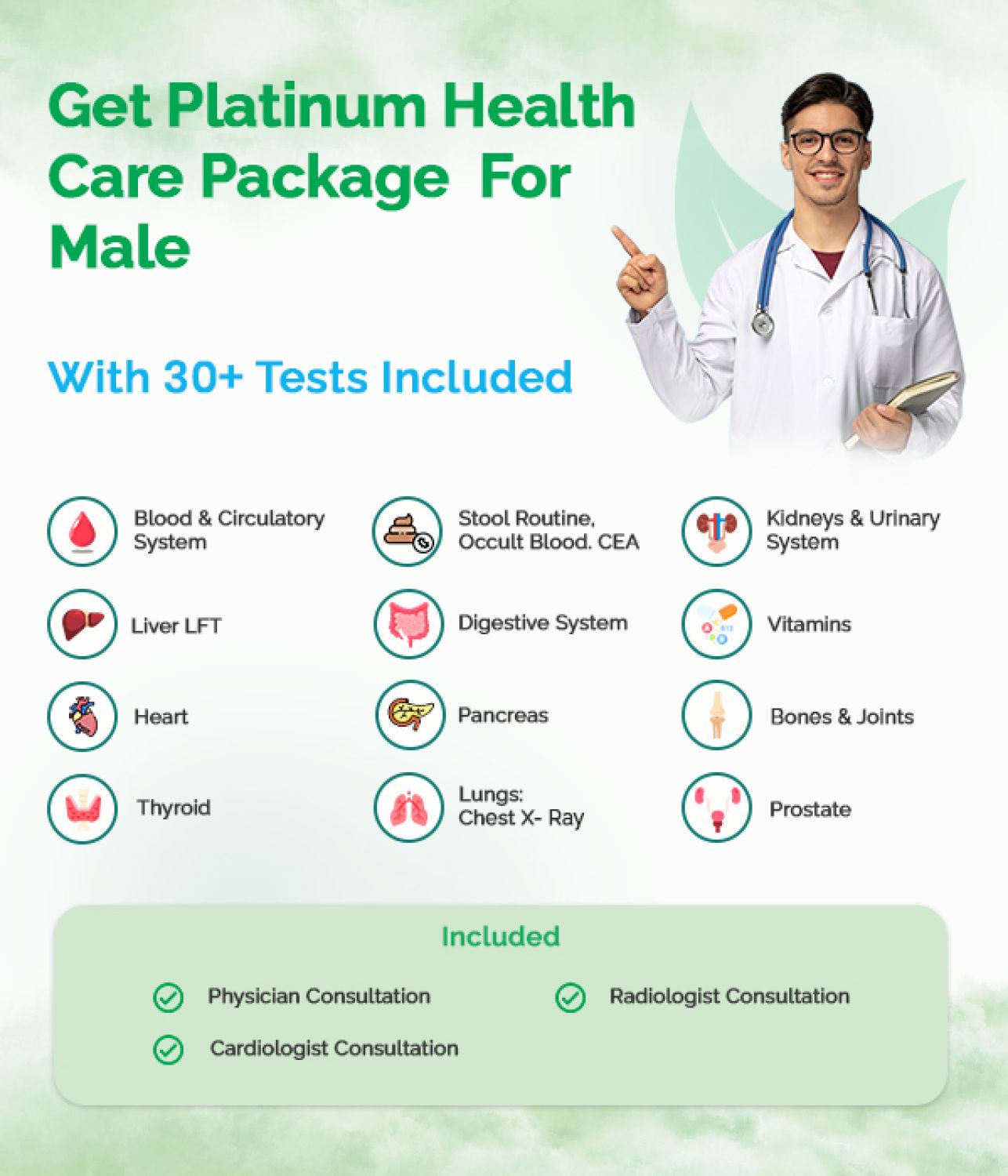
- Physician Consultation: Comprehensive review of all test results. Provides personalized health recommendations.
- Cardiologist Consultation: Expert evaluation of cardiac tests. Assesses heart disease risk and prevention strategies.
- Radiologist Consultation: Professional interpretation of imaging results. Ensures accurate diagnosis of scan findings.